
I am seeking treatment for

Pethidine Side Effects: What Is Normal and When to Worry
March 20, 2026
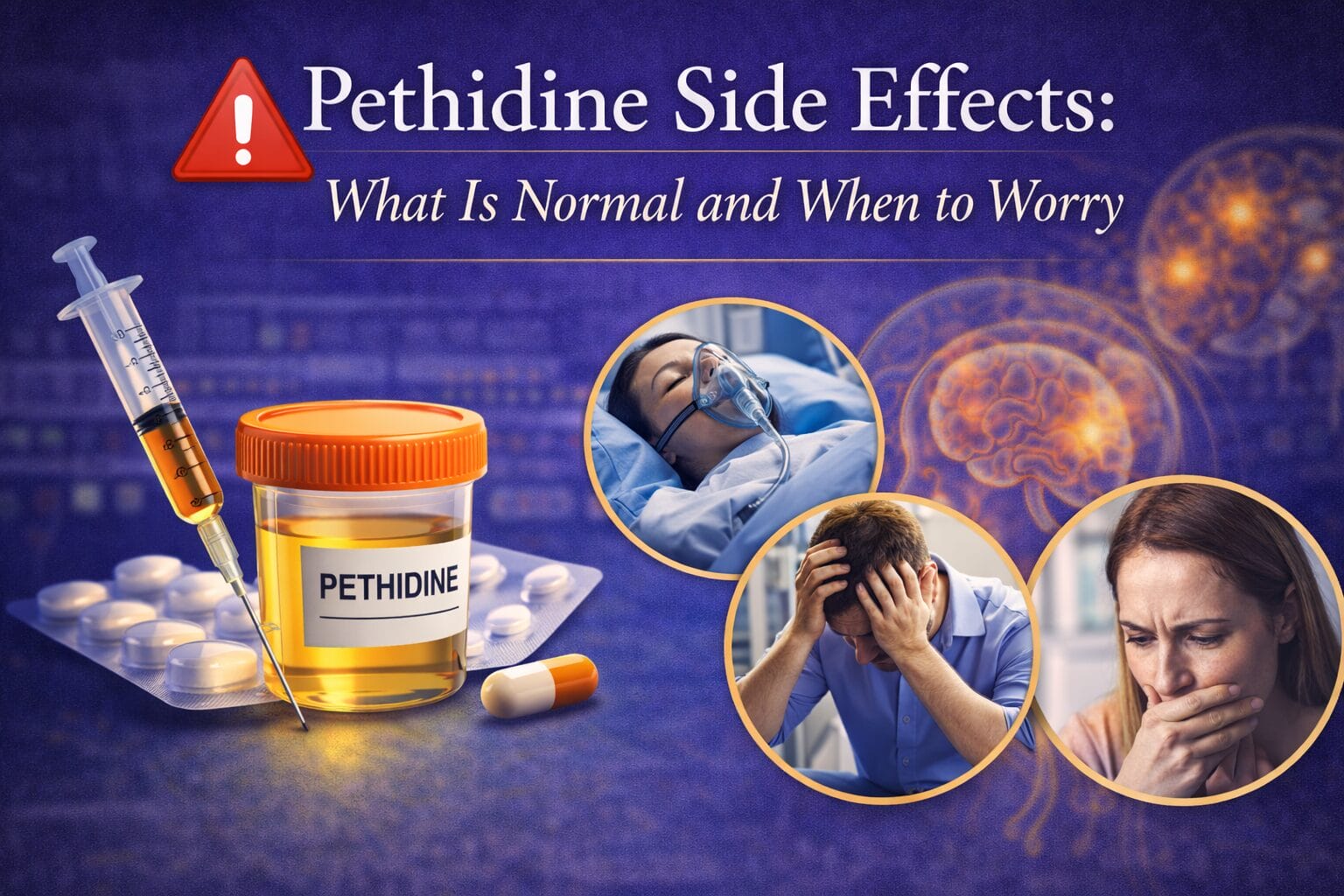
Pethidine is a medication many people encounter during medical treatment, often for short-term pain relief after surgery or during acute procedures. For some, it works exactly as intended. For others, the experience can raise questions.
You might notice unexpected symptoms. You might feel uneasy about how the medication affects you or someone you care about. It is also common for family members to become concerned when they observe changes they do not fully understand.
Understanding pethidine side effects can help bring clarity to what is happening, what is considered typical, and when it may be worth paying closer attention. While pethidine has legitimate medical uses, it also carries risks that are important to recognise.
What Is Pethidine?
Pethidine, also known internationally as meperidine, is an opioid pain medication. It is commonly used in medical settings for moderate to severe pain, including:
- Post-surgical pain
- Acute injury pain
- Procedure-related pain
Like other opioids, pethidine works by altering how the brain processes pain signals. This can provide effective relief, but it also explains why certain side effects occur.
For a broader clinical overview, you may find this helpful:
Pethidine: Risks, Effects, and Treatment
Common Pethidine Side Effects
Many side effects are linked to how opioids affect the central nervous system.
Frequently reported reactions include:
- Drowsiness
- Dizziness
- Nausea
- Vomiting
- Constipation
- Dry mouth
- Mild confusion
These symptoms are often more noticeable when:
- Starting the medication
- Dosage is increased
- Combined with other sedating substances
While uncomfortable, some of these reactions are considered expected with opioid medications. Others, however, may indicate higher risk.
Pethidine Risks: When Side Effects Become Concerning
Certain symptoms should never be ignored.
Potentially serious complications include:
- Respiratory depression
Slowed or shallow breathing - Excessive sedation
Difficulty staying awake or responding - Severe confusion or disorientation
- Low blood pressure symptoms
Faintness or collapse - Seizures
Rare but possible, particularly with high doses or prolonged use
Opioids can affect breathing centres in the brain. This is why pethidine is typically administered under medical supervision.
If you are unsure whether a reaction is normal, seeking clarification can prevent unnecessary risk. You can always contact Solace Asia for guidance or information.
Pethidine Overdose Symptoms
Understanding overdose signs is especially important for families and carers.
Possible pethidine overdose symptoms include:
- Very slow or stopped breathing
- Extreme drowsiness or unconsciousness
- Blue or pale lips and skin
- Pinpoint pupils
- Unresponsiveness to stimulation
An overdose is a medical emergency and requires immediate intervention.
Is Pethidine Addictive?
A common and important question is whether pethidine can lead to addiction.
Is pethidine addictive?
Yes. Like all opioids, pethidine has addiction potential.
Dependence can develop when pethidine is:
- Used for longer than intended
- Taken more frequently or at higher doses than prescribed
- Used to cope with emotional distress rather than physical pain
Addiction does not depend on intent. Many people who struggle with opioid dependence began with legitimate medical treatment.
Pethidine Withdrawal Symptoms
When the body becomes dependent, stopping pethidine suddenly can cause withdrawal.
Common pethidine withdrawal symptoms include:
- Anxiety
- Restlessness
- Sweating
- Nausea
- Muscle aches
- Sleep disturbance
- Irritability
Withdrawal is often deeply uncomfortable. In some cases, medical supervision is recommended.
Pethidine Long-Term Effects
Pethidine is generally intended for short-term use. Prolonged exposure increases risk.
Possible pethidine long-term effects include:
- Tolerance, needing higher doses over time
- Physical dependence
- Emotional blunting or mood changes
- Cognitive slowing or memory issues
- Worsening sleep quality
- Increased sensitivity to pain over time
In some cases, continued opioid use can create a cycle where pain and discomfort worsen rather than improve.
When Pethidine Use Signals a Larger Issue
Families often recognise patterns before the individual does.
Warning signs may include:
- Increasing reliance on the medication
- Preoccupation with obtaining doses
- Use beyond prescribed reasons
- Emotional distress when medication is unavailable
- Mixing with alcohol or other sedatives
These patterns may indicate pethidine addiction or broader opioid dependence.
Concerns around opioid addiction in Malaysia continue to grow, particularly involving prescription medications. Many individuals struggling with dependence began with legitimate medical use.
Treatment Options for Pethidine Dependence
When pethidine use becomes difficult to control, structured treatment can help restore stability.
Inpatient Care (Primary Option)
Inpatient treatment is often recommended when:
- Use is prolonged or at a high dose
- Withdrawal symptoms are significant
- Multiple substances are involved
- Previous attempts to stop have failed
Inpatient care provides:
- Medical supervision
- Safe stabilisation and tapering
- Psychological therapy
- Relapse prevention planning
Outpatient Care
Outpatient support may suit individuals who are medically stable and able to maintain safety between sessions. Many people benefit from starting with inpatient care and stepping down to outpatient support later.
You can learn more about Solace Asia’s treatment approach here:
https://www.solaceasia.org/rehab-treatment-options
Why Early Support Matters
Many people wait, hoping the situation resolves naturally. Unfortunately, opioid dependence rarely improves without intervention.
Early assessment can:
- Reduce medical risks
- Prevent escalation
- Improve long-term recovery outcomes
Even a simple conversation can provide clarity.
A Gentle Next Step
If you are concerned about pethidine side effects, medication dependence, or opioid use in general, you are not alone. These concerns are increasingly common among families, professionals, and patients across Malaysia, Southeast Asia, and the Middle East.
Solace Asia supports individuals facing prescription drug and opioid challenges through structured inpatient and outpatient programs.
You are welcome to:
- Contact Solace Asia
- Send a confidential WhatsApp message
- Speak with the admissions team
Sometimes understanding begins with a conversation.
Why Choose Us?
Our values make us the best addiction treatment facility in the region.
Trust
We offer addiction treatment services to clients and their families. As
the first private residential rehab in Malaysia, we set the benchmark for
ethical treatment.
Language
We have the ability to provide treatment not only in English, but also
Bahasa Melayu, Mandarin, Cantonese and even Arabic! We are truly
local yet global.
Culture
All our treatment has the Asian culture embedded in our modalities.
We are 100% locally owned and operated agency, every center in Asia
are owned by expatriates.
Academia
We don't only do Addiction Treatment, we also teach it! We are a
NAADAC Approved Education Provider. We are also on Udemy, the
worlds largest education platform.
