I am seeking treatment for


How long does addiction recovery take?
December 24, 2025

One of the most common questions people ask when beginning their journey toward healing is, “How long will recovery take?” The answer, however, isn’t one-size-fits-all. Addiction recovery is a deeply personal process, and the timeline varies based on the individual, the substance used, and the type of treatment received.
At Solace Asia, we believe that recovery is not a race but a lifelong commitment to change, growth, and healing.
The Phases of Recovery
Recovery typically unfolds in stages, each with its own timeframe:
1. Detox (1–2 weeks)
The first step in recovery is cleansing the body of substances. This phase can last from a few days to two weeks, depending on the substance used and the severity of the addiction. Medical supervision is often necessary to manage withdrawal symptoms safely.
2. Inpatient or Intensive Treatment (1–3 months)
In a residential rehab setting, individuals receive round-the-clock support, therapy, and structure. Programmes often last 28 to 90 days, though some may extend longer for complex cases.
3. Outpatient Support & Aftercare (3–12 months or more)
After inpatient care, clients may transition to outpatient therapy or Intensive Outpatient Programmes (IOP), where they continue attending regular sessions while living independently. This phase can last several months and is crucial for building long-term resilience.
4. Maintenance & Long-Term Recovery (ongoing)
Even after formal treatment ends, recovery continues. Many individuals join support groups, continue therapy, or work with a sponsor or coach. This ongoing support helps maintain sobriety and manage life’s stressors without returning to substance use.
Recovery Is Not Linear
It’s important to understand that recovery isn’t a straight path. There may be setbacks, relapses, or moments of doubt, and that’s okay. What matters is staying committed and seeking help when needed.
Healing from addiction is more than stopping the substance’; it’s about changing behaviours, healing trauma, repairing relationships, and finding meaning beyond the addiction.
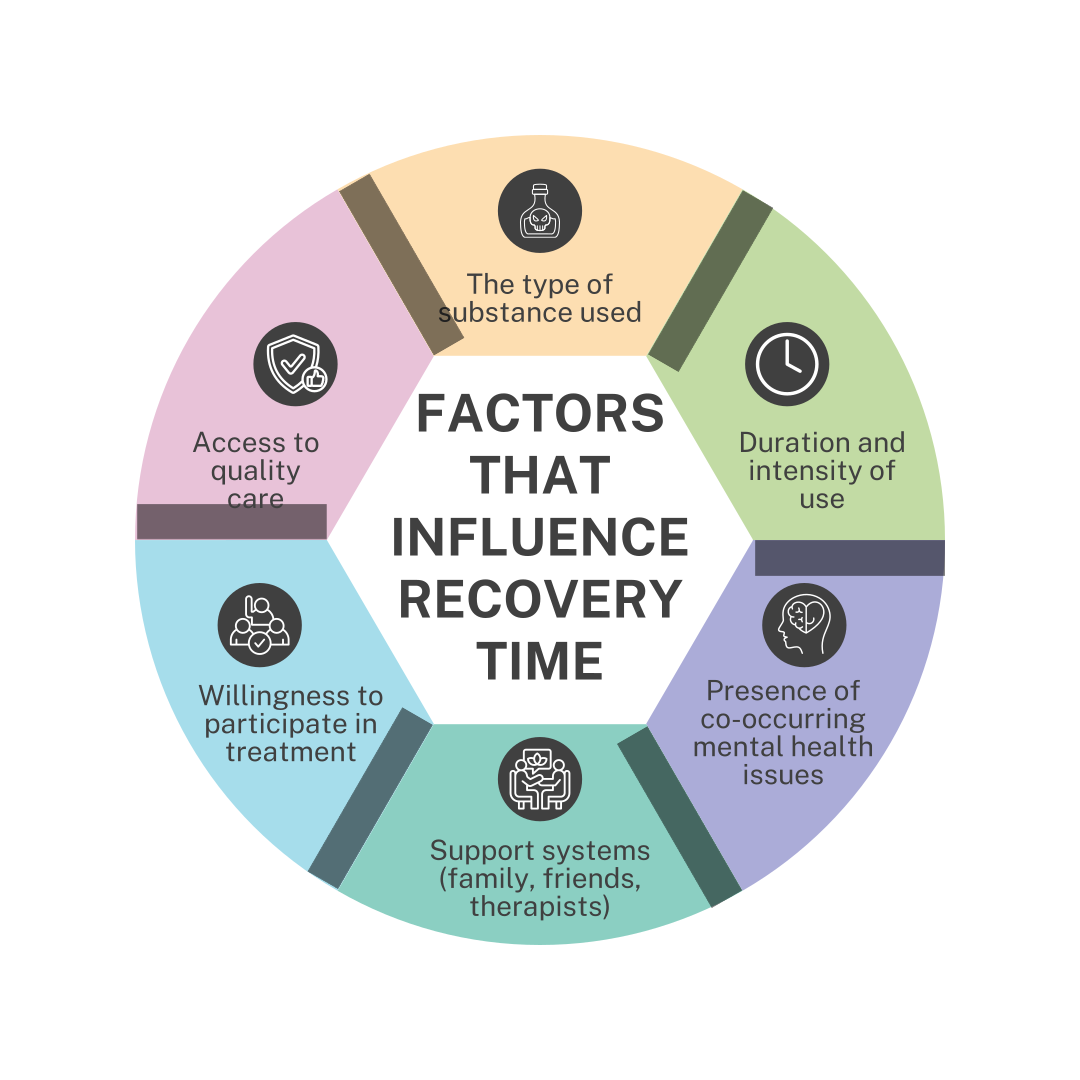
Factors That Influence Recovery Time
Several factors can affect how long recovery takes, including:
How Solace Asia Can Help
Whether you’re just starting your journey or have been working on your recovery for years, Solace Asia offers personalised treatment plans that evolve with your needs. From detox to aftercare, we’re here every step of the way, helping you build a future beyond addiction.
To talk through a recovery plan, contact the Solace Asia team for a free, confidential consultation. If cost is a concern, our sister retreat Salus offers a 90-day residential programme at a lower cost, in a different residential location, maintaining Solace’s clinical standards for treatment.
Final Thoughts
Recovery is not about how fast you get there; it’s about staying on the path. Some may feel strong after three months; others may need ongoing support for years. What’s important is that you don’t have to do it alone.
Let Solace Asia be your partner in lasting recovery.
Frequently asked questions
How long does detox take?
Usually a few days and up to two weeks, depending on the substance, how much was used and for how long. Detox should be medically supervised.
How long is residential rehab?
Most residential programmes last 28 to 90 days. At Solace Asia, the primary programme runs for 28 days and is followed by secondary treatment.
How long does aftercare last?
At Solace Asia, the aftercare programme (the Solace Continuum) runs for 18 months after discharge, because the first months back home are when relapse is most likely.
Does a relapse mean starting recovery again?
No. Recovery is rarely a straight line. A relapse is a sign that more support is needed, and getting help quickly makes it easier to get back on track.
Is recovery ever finished?
Addiction is a long-term condition, so most people keep some form of support, such as groups, therapy or a mentor, for years. Over time recovery becomes part of everyday life. Contact the Solace Asia team for a free, confidential consultation.
Why Choose Us?
Our values make us the best addiction treatment facility in the region.
Trust
We offer addiction treatment services to clients and their families. As
the first private residential rehab in Malaysia, we set the benchmark for
ethical treatment.
Language
We have the ability to provide treatment not only in English, but also
Bahasa Melayu, Mandarin, Cantonese and even Arabic! We are truly
local yet global.
Culture
All our treatment has the Asian culture embedded in our modalities.
We are 100% locally owned and operated, unlike most centres in Asia, which
are owned by expatriates.
Academia
We don't only do Addiction Treatment, we also teach it! We are a
NAADAC Approved Education Provider. We are also on Udemy, the
worlds largest education platform.
