I am seeking treatment for


What’s the difference between inpatient and outpatient rehab?
December 15, 2025

When seeking treatment for addiction, one of the most important decisions you’ll make is choosing between inpatient and outpatient rehab. Both are designed to help individuals overcome substance dependence, but they differ in structure, intensity, and level of support.
Understanding these differences can help you or your loved one make a more informed choice in the journey towards recovery.
What Is Inpatient Rehab?
Inpatient rehab, also known as residential treatment, involves staying at a rehab centre full-time for a specific period—typically 28 to 90 days, depending on individual needs.
This immersive setting provides:
- 24/7 medical and emotional support
- Structured daily routines
- Therapy sessions (individual and group)
- Holistic care (such as mindfulness, fitness, and art therapy)
- A safe, trigger-free environment
Inpatient rehab is ideal for those with severe addiction, co-occurring mental health disorders, or those who have relapsed multiple times.
At Solace Asia, our residential programme focuses on holistic healing, personalised treatment plans, and building a solid foundation for long-term recovery.
What Is Outpatient Rehab?
Outpatient rehab allows individuals to live at home while attending scheduled therapy sessions at a clinic or treatment centre. It is more flexible and less intensive than inpatient rehab.
Outpatient programmes include:
- One-on-one counselling
- Group therapy sessions
- Psychoeducation
- Relapse prevention planning
This option is best suited for individuals with mild to moderate addiction, or for those transitioning from inpatient care. It’s also ideal for people who have work, school, or family obligations they can’t pause.
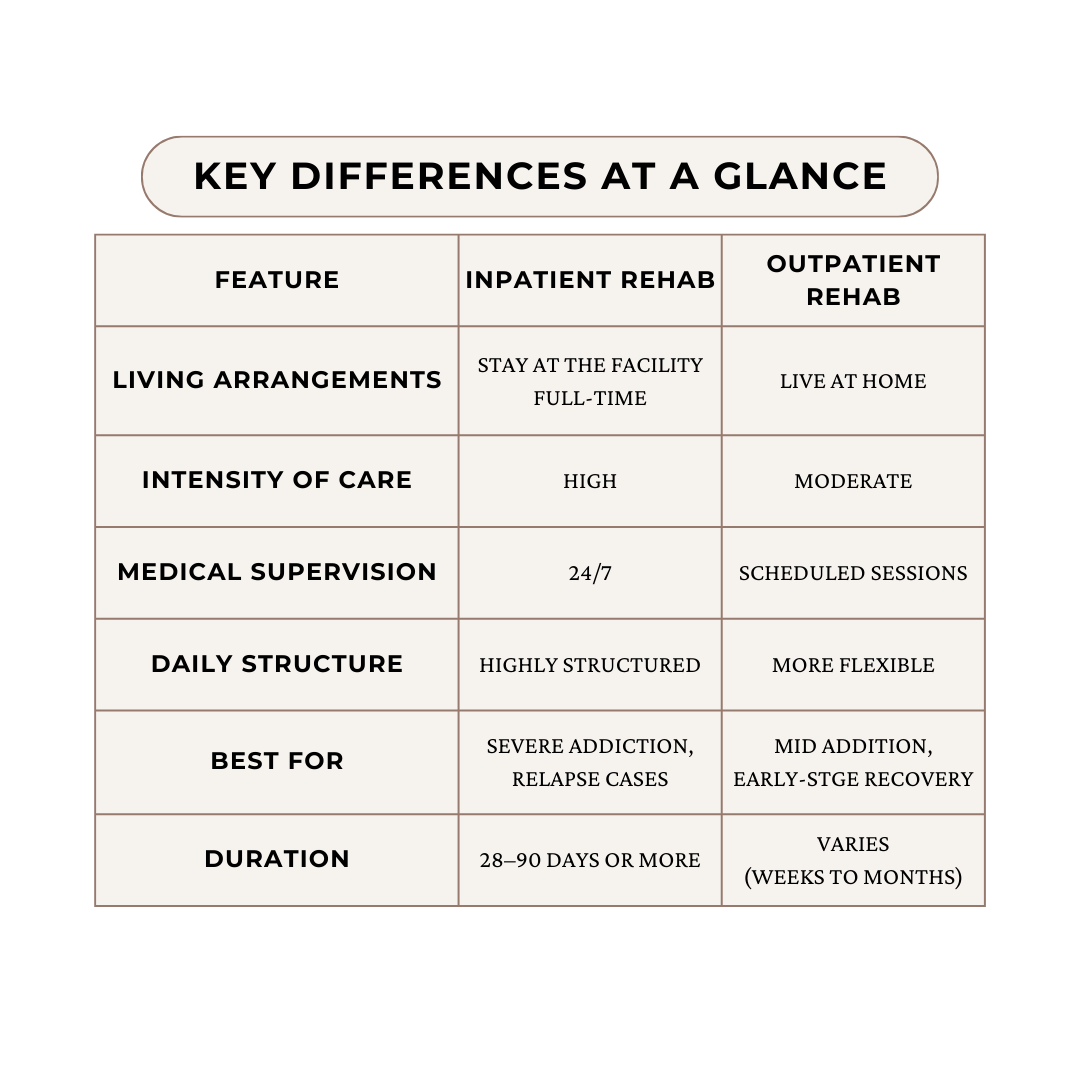
Key Differences at a Glance
Which One Is Right for Me?
Choosing between inpatient and outpatient rehab depends on:
- The severity and duration of your addiction
- Your current living environment
- Whether you’ve attempted recovery before
- The presence of mental health issues or medical complications
If you’re unsure, speaking with an addiction specialist can help assess your situation and recommend the best fit.
To talk through whether inpatient or outpatient care suits you, contact the Solace Asia team for a free, confidential consultation. If cost is a concern, our sister retreat Salus offers residential care at a lower cost, in a different residential location, maintaining Solace’s clinical standards for treatment.
Support at Every Level
At Solace Asia, we offer both inpatient and outpatient treatment programmes, tailored to your unique needs. Whether you’re seeking round-the-clock support or a more flexible recovery path, we’re here to walk beside you every step of the way.
No matter where you begin, the most important thing is that you start.
Frequently asked questions
How long does inpatient rehab last?
Inpatient (residential) rehab usually lasts 28 to 90 days, depending on the person’s needs. At Solace Asia, the primary residential programme runs for 28 days and is followed by secondary treatment and aftercare.
Is outpatient rehab as effective as inpatient rehab?
It can be for people with mild to moderate addiction, a stable home and strong family support. For severe or long-term addiction, repeated relapses or a mental health condition alongside addiction, inpatient care gives more structure and safety.
Can I keep working during rehab?
With outpatient rehab, yes: you attend scheduled sessions and live at home. Inpatient rehab means stepping away from work for a few weeks, which many people find helps them focus fully on recovery.
Can I start with inpatient rehab and move to outpatient care?
Yes. Many people start with residential treatment and then step down to outpatient support and aftercare, which helps protect recovery once they are back in daily life.
How do I know which type of rehab I need?
An assessment with an addiction specialist is the best way to decide. Contact the Solace Asia team for a free, confidential consultation.
Why Choose Us?
Our values make us the best addiction treatment facility in the region.
Trust
We offer addiction treatment services to clients and their families. As
the first private residential rehab in Malaysia, we set the benchmark for
ethical treatment.
Language
We have the ability to provide treatment not only in English, but also
Bahasa Melayu, Mandarin, Cantonese and even Arabic! We are truly
local yet global.
Culture
All our treatment has the Asian culture embedded in our modalities.
We are 100% locally owned and operated, unlike most centres in Asia, which
are owned by expatriates.
Academia
We don't only do Addiction Treatment, we also teach it! We are a
NAADAC Approved Education Provider. We are also on Udemy, the
worlds largest education platform.
